
When it comes to enterprise storage, choosing between Hard Disk Drives (HDDs) and Solid State Drives (SSDs) is one of the most consequential decisions a buyer makes. Each technology has real strengths, and the wrong choice is expensive in both directions — overpaying for speed you never use, or under-speccing a workload that then bottlenecks.
Understanding the fundamental differences
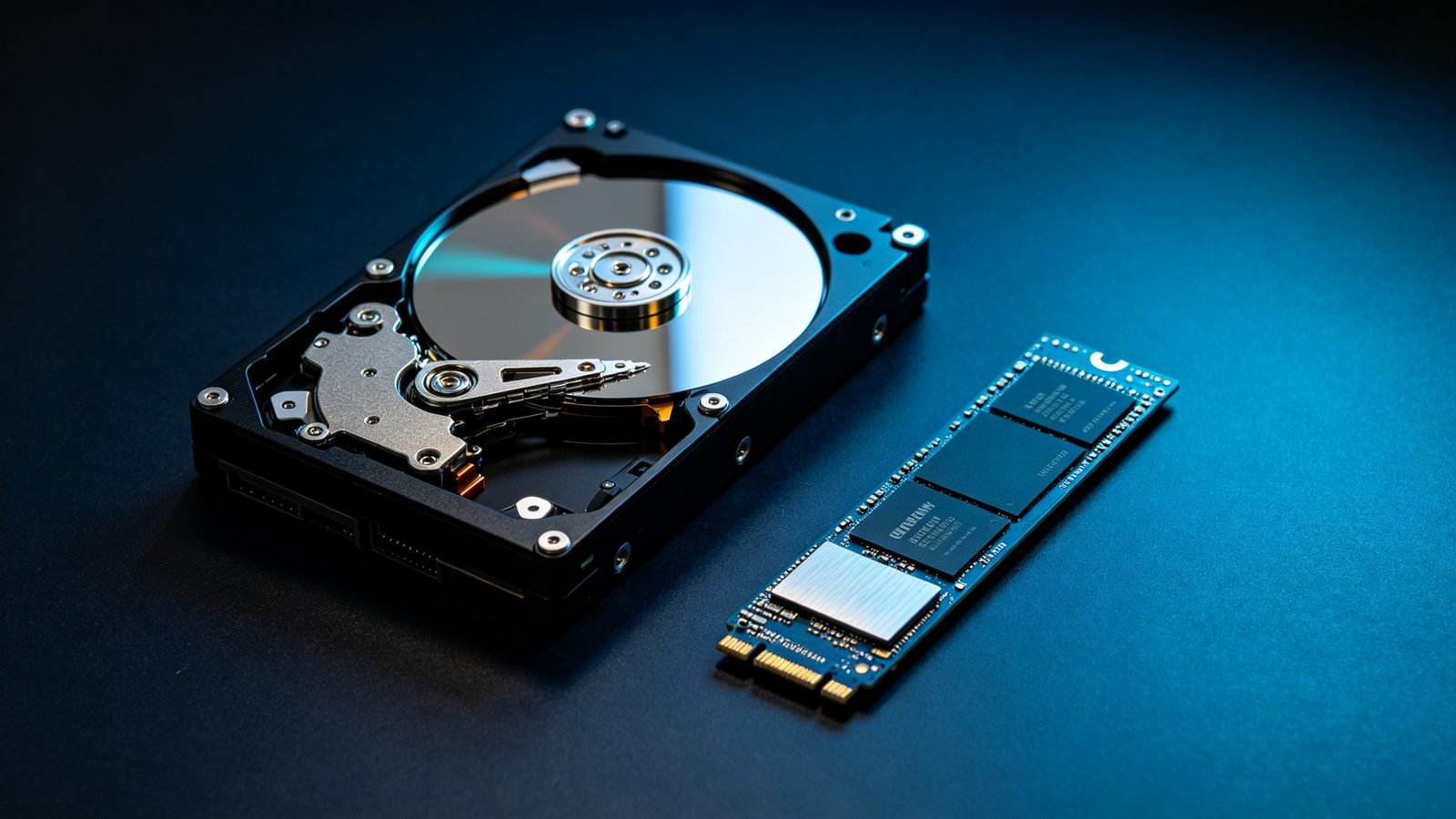
Hard disk drives store data on spinning magnetic platters. A read/write head moves across those platters to access information. That mechanical design gives HDDs their characteristic profile: high capacity at low cost per terabyte, but slower access times and sensitivity to physical shock.
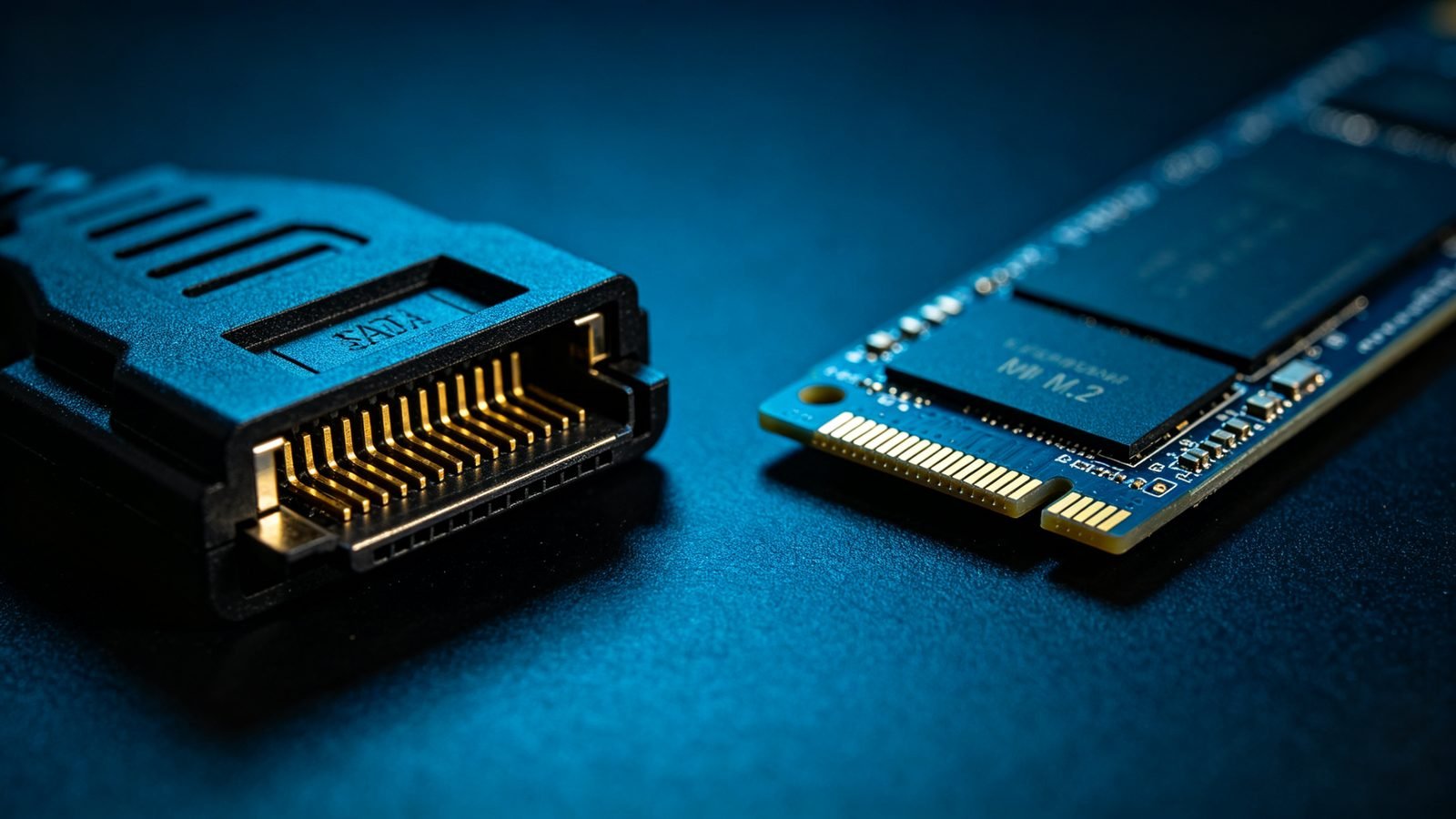
Solid state drives store data electronically on NAND flash chips. With no moving parts, SSDs deliver dramatically faster read/write speeds, better shock resistance and lower power draw — at a significantly higher cost per gigabyte.
Performance comparison
Speed and latency. SSDs win decisively here. A typical enterprise SATA SSD delivers sequential reads of roughly 500–550 MB/s, while NVMe drives can exceed 3,000 MB/s. By comparison, a high-performance enterprise HDD such as the Seagate Exos X18 tops out around 270 MB/s.
Random access shows an even wider gap. SSDs handle hundreds of thousands of IOPS; HDDs manage a few hundred. That is why SSDs dominate databases, virtualisation and any application where many requests arrive at once.
Reliability and durability. With no moving parts, SSDs are inherently more resistant to shock and vibration — useful in mobile or rugged environments. HDDs, however, have been the workhorse of data centres for decades and, in a controlled environment, remain extremely reliable.
Enterprise HDDs such as the Seagate Exos series are built for 24×7 operation, and include rotational vibration sensors and advanced error correction to protect data integrity under continuous load.
Cost considerations
Cost remains the HDD’s strongest argument. Enterprise hard drives currently sit in the region of $15–20 per terabyte, while enterprise SSDs run closer to $80–150 per terabyte. Across hundreds of terabytes — let alone petabytes — that gap dominates the business case.
Total cost of ownership, though, is not just the purchase price. It should include:
- Power consumption — SSDs draw significantly less power, cutting electricity and cooling costs.
- Space efficiency — higher-density SSDs can reduce rack space requirements.
- Performance value — faster drives can reduce how many units a given workload needs.
- Maintenance — SSDs generally require less servicing over their working life.
When to choose HDDs
Hard drives remain the optimal choice in several well-defined situations:
- Mass storage and archiving — large volumes of data that are accessed infrequently.
- Sequential workloads — video editing, backup systems and media streaming, where data is read in order.
- Budget-constrained environments — where capacity needs outrun the available SSD budget.
- Cold storage — long-term retention of data that rarely needs to be touched.
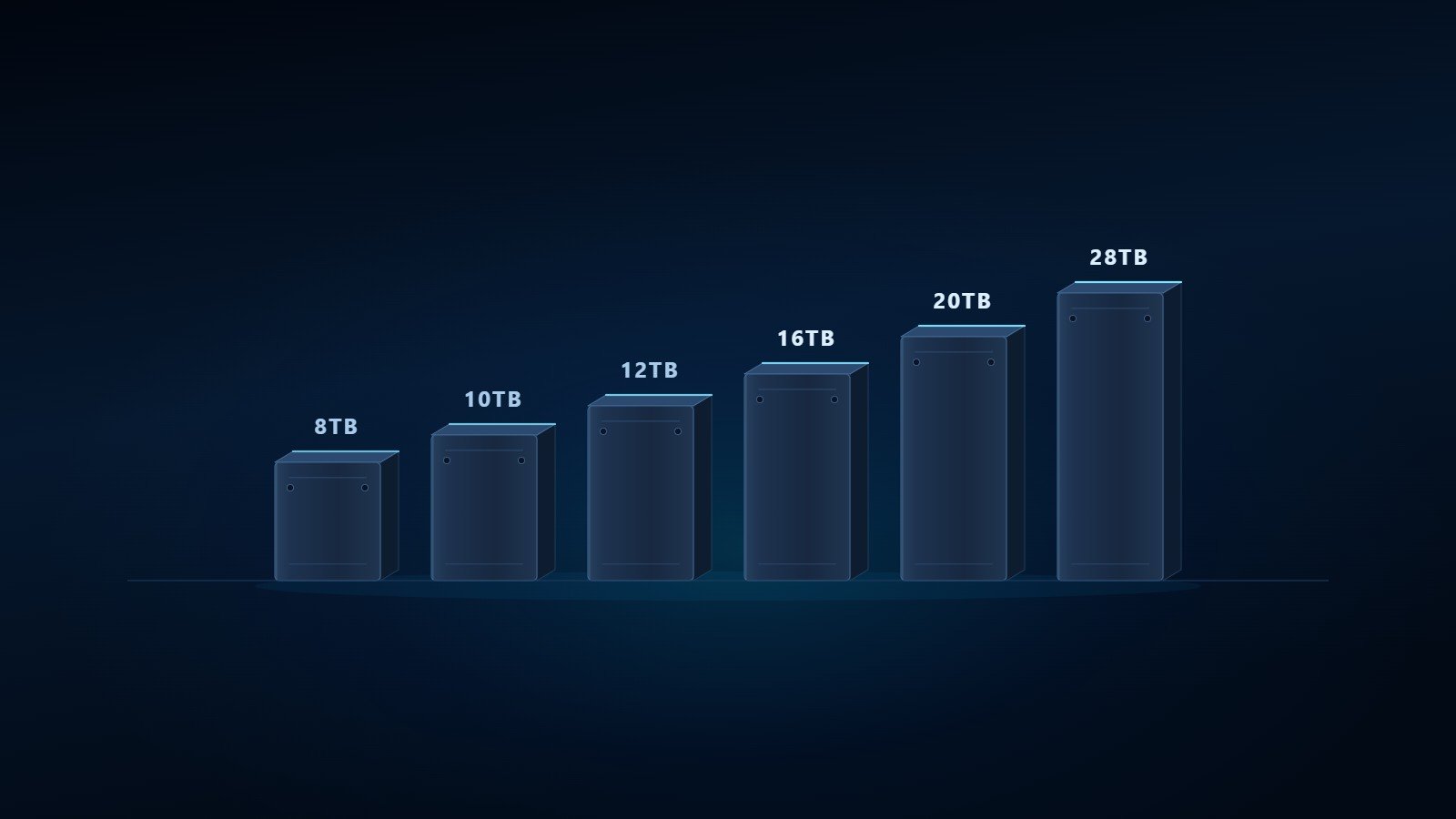
Seagate’s Exos enterprise HDDs, available up to 28TB, are designed specifically for these high-capacity, always-on environments.
When to choose SSDs
Solid state drives excel where latency and throughput decide the outcome: databases, virtualisation and real-time analytics; applications where response time is critical; environments with many concurrent users or transactions; mobile or rugged deployments; and noise-sensitive installations.
Hybrid approaches
Many modern storage architectures use both. Frequently accessed “hot” data lives on fast SSDs while less critical “cold” data sits on high-capacity HDDs — balancing performance against cost instead of choosing one extreme.
Conclusion
The choice between HDD and SSD is not about which technology is better. It is about which is right for the workload in front of you. For most organisations the answer is both: SSDs for performance-critical applications, HDDs for capacity-heavy storage.
Working with a supplier who sells both — and who will tell you when the cheaper option is the correct one — is the fastest way to get that balance right.