
Storage procurement decisions that looked straightforward two years ago now need a second look. Not because the hardware changed dramatically, but because the economics around it did: which capacity tier is cheapest per terabyte, what a rack can power, and how long you have to wait for new stock. Here is what is moving, and what it means for the way you write a purchase order.
1. The capacity ceiling keeps rising, and the value migrates
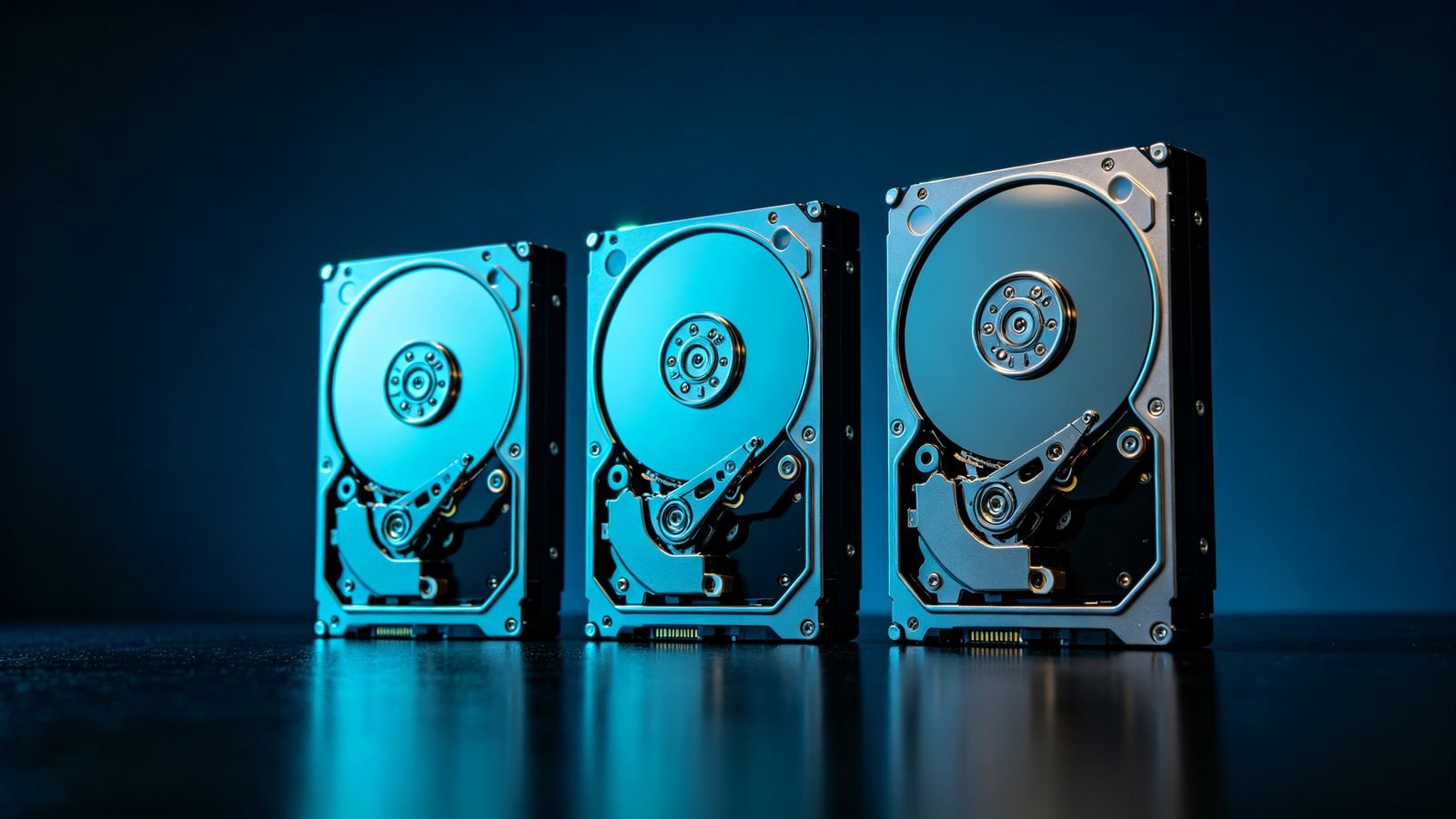
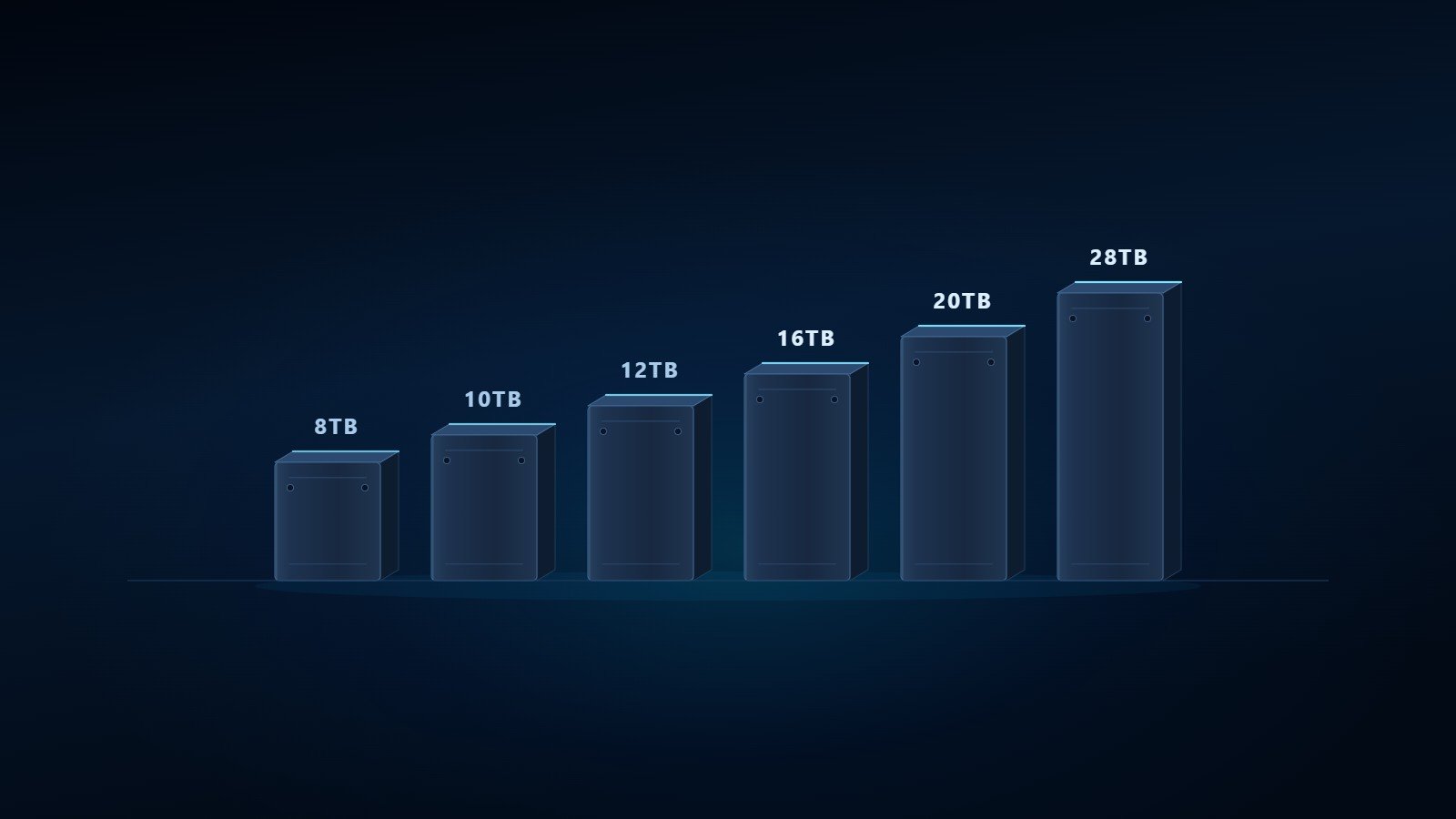
New recording technologies have pushed flagship capacities past the point where a single drive covers what used to need two. That is good news for rack density — and it quietly reshapes which capacity point is the price-performance sweet spot.
The pattern is consistent across every generational shift: the newest, densest drives launch at a premium, because supply is limited and early buyers are paying for density, not for bytes. Meanwhile the capacity tier that was flagship two generations ago keeps getting pushed downmarket as it manufactures at scale, moves into refurbished and recertified channels, and competes on cost per terabyte rather than density per slot.
What it means for buyers: the cheapest terabyte is usually not the newest drive. If your constraint is budget rather than rack space, the mature mid-to-high capacity band is frequently where the best per-terabyte economics live. Check both before assuming newer is better value.
2. Tiering is now the default architecture, not an optimisation
AI workloads pulled storage in two directions at once. Training and inference need the lowest latency available, which drives NVMe adoption hard. But the same workloads also produce enormous volumes of data that must be retained — checkpoints, datasets, logs, feature stores — and none of that belongs on expensive flash.
The result is that layered storage stopped being a design choice and became the baseline. Flash absorbs the working set; hard drives absorb everything that must exist but is not actively read.
What it means for buyers: expect the mix of flash and HDD in a typical refresh to shift towards more HDD capacity, not less. Flash buying grows in value, HDD buying grows in volume.
3. Power and cooling are back as first-class constraints
For a decade, the dominant rack metric was cost per terabyte. Rising energy costs and denser accelerator racks have made power a harder constraint — in some facilities, harder than budget.
This changes the arithmetic in a way that is easy to miss when comparing quotes drive by drive. Two drives at half the capacity do not cost twice as much to run as one drive at double the capacity; they cost roughly twice as much again in idle power, and they consume twice the slots, twice the cabling and twice the backplane ports.
What it means for buyers: the useful metric has moved from cost per terabyte toward cost per terabyte plus watts per terabyte plus slots per terabyte. On a 24-bay chassis, populating with higher-capacity drives reduces the number of chassis you need to power — and the saving can exceed the price difference on the drives themselves.
4. Lead times for new stock remain the planning risk
New-drive manufacturing is concentrated in a small number of producers, and their capacity allocation shifts with the demands of hyperscale buyers. When a large cloud provider commits to a volume, everyone downstream waits. Lead times for current-generation enterprise drives have a habit of stretching with little advance notice.
This is what makes the spot and refurbished channels structurally important rather than a fallback. A distributor holding verified stock can deliver in days what a factory allocation might promise in weeks.
What it means for buyers: plan procurement on availability, not only on list price. A slightly higher per-unit price on in-stock drives is often cheaper than a production delay. Where deployment schedules are fixed, qualifying a second capacity point as an acceptable substitute is worth the engineering time.
5. Grading and traceability are becoming the differentiator
As refurbished and recertified supply grows to meet demand for mature capacity points, the difference between suppliers stops being price and starts being process: whether drives are tested individually, whether SMART data is disclosed, whether firmware is current, what the warranty actually covers and how it is enforced.
The terminology itself is unregulated. “Refurbished”, “recertified” and “renewed” have no shared legal definition, and a buyer comparing two quotes labelled identically may be comparing two very different products.
What it means for buyers: evaluate the process, not the label. Sample-test before scaling, require health data with the shipment, and put the warranty terms in writing. Suppliers who can answer detailed questions about their grading process are usually the ones whose grading means something.
What this adds up to
- Compare more than one capacity point. The newest drive is rarely the best value per terabyte; the mature band often is.
- Budget power and slots, not just drives. In dense racks these can outweigh the unit price difference.
- Buy for availability when schedules are fixed. Lead time is a cost, and it is not on the quote.
- Treat grading as a process question. Ask what was tested, and ask to see the data.
- Keep the tier architecture explicit. Decide what lives on flash and what lives on spinning disk before you size either.
None of these trends changes the fundamental case for hard drives in capacity storage. They change how a good purchasing decision is made — which is less about list price than it used to be, and more about total cost, availability and verified condition.